
How to Clean Stainless Steel Water Bottle
Updated
Our Commitment to Accuracy and Objectivity
Ocemida is committed to delivering reliable and unbiased information. Our editorial team, comprised of experienced editors and medical experts, meticulously reviews every article and guide to ensure the content is accurate, up-to-date, and free from bias.
Rigorous Fact-Checking Process
To uphold the highest standards of accuracy, we adhere to the following fact-checking guidelines:
Trusted Sources: We only cite reputable sources, such as peer-reviewed journals, government reports, academic and medical associations, and interviews with credentialed healthcare professionals.
Evidence-Based: All claims and data are supported by at least one credible source. Each article includes a comprehensive bibliography with full citations and links to the original sources.
Internal Linking: While we may include internal links to other relevant Ocemida pages for better navigation, these links are never used as primary sources for scientific information.
Expert Review: A member of our medical or scientific expert team provides a final review of the content and cited sources for all articles and product reviews related to medical and health topics.
By following these rigorous standards, Ocemida strives to provide readers with reliable and informative content.
Bottle care guide
A 2-minute daily routine, plus simple fixes for smells, coffee stains, mineral buildup and mold.
How to Clean a Stainless Steel Water Bottle in 5 Steps
- Remove the lid and pull out the silicone gasket if it comes out.
- Fill the bottle one-third with hot water and a few drops of dish soap.
- Scrub the inside, rim and threads with a bottle brush. Use a small brush on the lid and gasket groove.
- Rinse every part with hot water until no soap remains.
- Air dry upside down with the lid off. Close it only when fully dry.
Do this daily. Once a week, add a baking soda and vinegar deep clean. Never use chlorine bleach or steel wool.
What Are You Trying to Fix?
- A bad smellBaking soda, then vinegar
- Coffee or tea stainsBaking soda paste
- White, chalky filmVinegar or citric acid soak
- Black or pink spotsMold clean, or replace
- Dirty lid or gasketWeekly gasket clean
- Dishwasher safe?Check the label first
How to Get Rid of Smells With Baking Soda and Vinegar
- ⏱ About 45 minutes
- 📅 Weekly
Most smells come from biofilm, a thin layer of bacteria on the walls and under the gasket. Use baking soda and vinegar one after the other. Mixed together, they neutralize each other and clean less well.
- Add 1 to 2 tablespoons of baking soda, fill with hot water and soak 30 minutes (overnight after coffee, milk or protein shakes). Scrub and rinse.
- Fill with 1 part white vinegar to 2 parts warm water, and soak the lid and gasket in the same mix for 15 to 30 minutes.
- Scrub the threads and gasket groove, rinse two or three times and air dry.
Smell still there? It is almost always the gasket, or a bottle that was closed while damp. Clean the gasket separately and let everything dry fully.
How to Remove Coffee and Tea Stains
- Mix baking soda with a few drops of water into a paste. Scrub it onto the stains with a bottle brush, then rinse.
- For stubborn stains, use an oxygen-based cleaner (sodium percarbonate) dissolved in hot water, following the package directions. Leave the cap off while it works, then rinse at least three times.
How to Remove Mineral Buildup (Limescale)
A white, chalky film is limescale from hard water. It is a mineral deposit, not mold, but it roughens the surface and makes the bottle harder to keep clean.
- Fill with equal parts white vinegar and hot water, or dissolve about 1 tablespoon of citric acid per litre of hot water.
- Soak at least 4 hours, or overnight.
- Scrub, rinse three times and air dry.
Prevention
Filtered water slows buildup. Descale monthly, or every two weeks if your water is very hard.
How to Clean Mold Out of a Water Bottle
Mold shows up as black, green or pink spots, usually behind the gasket, in the lid threads or in the bottom corner. Deal with it as soon as you see it.
- Take the lid apart and remove the gasket.
- Wash every part with hot soapy water and a brush to remove all visible growth.
- Soak the parts in 3% household hydrogen peroxide, or fill the bottle with it, for 10 to 30 minutes. Rinse very thoroughly.
- Air dry completely before putting it back together.
When to replace instead
If spots remain after cleaning, come back, or sit inside parts you cannot take apart, replace the gasket, lid or bottle. A new gasket is inexpensive and the safer choice. If you are sensitive to mold, do not keep using a bottle you cannot fully clean.
Never mix cleaners
Use one product at a time and rinse between them. Hydrogen peroxide with vinegar, or bleach with vinegar or ammonia, can release irritating or toxic fumes.
How to Clean the Lid and Gasket
The lid and gasket cause most lingering smells and nearly all mold. Take them apart and clean them once a week.
- 1Underside of the cap and its threads
- 2The gasket and the groove it sits in
- 3Bottle rim and threads
- 4The bottom corner inside the bottle
- Pry the gasket out with your fingers or a blunt wooden pick, not a knife. A nick in the silicone traps grime and can cause leaks.
- Scrub the groove with a small brush and soapy water.
- Wash the gasket, check it for cracks, stretching or dark spots, and let it dry.
- Press it back in evenly all the way around. A twisted gasket is the usual cause of a leaking lid.
Can Stainless Steel Water Bottles Go in the Dishwasher?
Only if the manufacturer says so. Many single-wall bottles are dishwasher safe. Many vacuum insulated bottles are hand wash only, because dishwasher heat and detergent can dull painted or powder-coated finishes and may affect the vacuum seal over time. Lids with plastic parts can also warp.
If your bottle is labeled dishwasher safe, use the top rack. If there is no label, hand wash. Either way, a dishwasher cannot scrub the gasket groove, so clean the gasket by hand.
How Often Should You Clean a Stainless Steel Water Bottle?
| Daily | Soap, bottle brush, air dry with the lid off |
|---|---|
| Weekly | Baking soda and vinegar deep clean, gasket removed |
| Monthly | Descale with vinegar or citric acid |
| As needed | Coffee stains, mold |
| When worn | Replace the gasket and your bottle brush |
After anything besides water (coffee, tea, milk, smoothies or sports drinks), wash it the same day.
Mistakes to Avoid
- Rinsing with water only. It does not remove biofilm.
- Closing the lid on a damp bottle, the most common cause of mold.
- Chlorine bleach, which can pit stainless steel.
- Steel wool or abrasive pads, which scratch the surface.
- Mixing cleaning products in the bottle.
- A worn-out brush. Replace it when the bristles splay or it smells.
Frequently Asked Questions
Can you mix vinegar and baking soda to clean a water bottle?
You can, but it works worse. Vinegar is an acid and baking soda is a base, so together they mostly neutralize each other. Use baking soda first, rinse, then vinegar.
How do you clean a water bottle without a bottle brush?
Add a spoonful of uncooked rice, a drop of dish soap and some warm water, close the lid and shake hard for a minute. The rice scrubs the walls. Rinse well. It will not reach the gasket groove, so clean that with a small brush or cloth.
How do you get the metallic taste out of a new stainless steel bottle?
Wash it with hot soapy water, soak it for 15 minutes in 1 part vinegar to 2 parts warm water, then rinse well. If a metallic taste develops in an older bottle, check the inside for rust spots or pitting, which mean it is time to replace it.
Is it safe to use a water bottle after it had mold?
Usually, if you clean every part, nothing visible remains and the smell is gone. If you cannot reach all of it, or spots come back, replace the affected part or the bottle.
Does rinsing with hot water sanitize a water bottle?
No. Hot water helps soap work, but scrubbing is what removes biofilm. A hot rinse on its own is not enough.
How often should you replace a water bottle gasket?
Replace it when it cracks, stretches, stays stained or holds a smell after cleaning. Check it during your weekly deep clean.
Plastic-Free Tools That Make Cleaning Easier
Two things make this routine easier: a bottle with fewer places for grime to hide, and a brush that does not shed plastic fibers into the bottle you just cleaned.
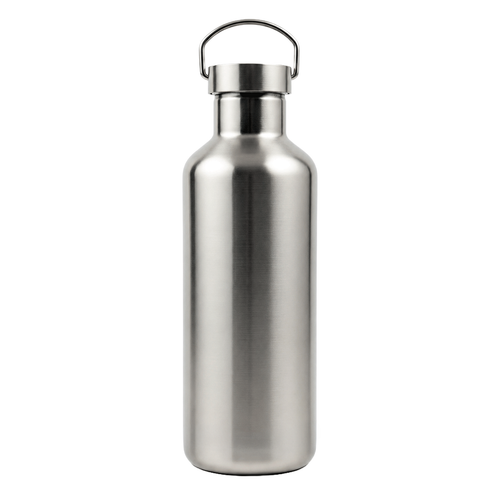
H2Stash™ Plastic-Free Insulated Bottle
- Hollow all-steel cap with no plastic insert to trap grime
- One removable silicone gasket, easy to clean
- Wide mouth for easy scrubbing
- 316L stainless steel interior, lifetime warranty
Coconut Bristle Bottle Brush
- Natural coconut fiber bristles, no nylon
- No plastic fibers left in your bottle
- Firm bristles for scrubbing biofilm
- Biodegradable bristles
Table of Contents
Recommended Product


